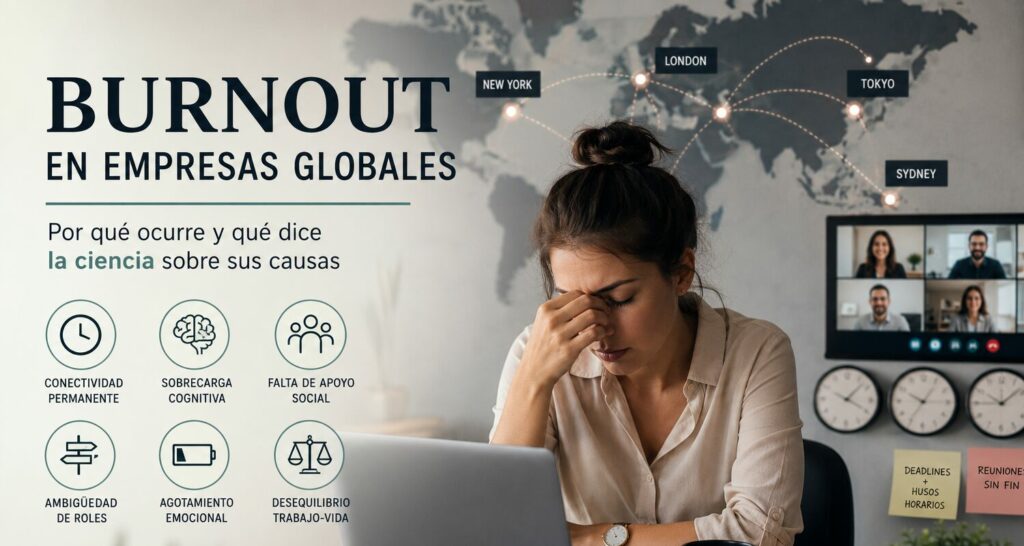
Hybrid work has transformed the way we work and organize ourselves, but above all, it has transformed the way we lead. For decades, leadership was tied to physical presence: teams in the same space, direct supervision, and face-to-face communication… Today many teams combine office work with remote work and collaborate from different countries… Even, many workers do only remote work. Leading in this context requires new skills in connecting with others, building trust, and communicating. This article explores the psychological keys to becoming the leader the future needs.
From Control to Trust
In traditional work environments, physical presence gave leaders a sense of control. Seeing the team in the office, interacting with them constantly, and closely supervising their work were all part of the daily routine. . Remote workers have greater autonomy and decision-making authority. Today, physical distance requires us to place more trust in the people we lead.
When teams work from different locations, constant monitoring loses its real effectiveness. Measuring engagement based on hours spent in front of a screen is no longer a reliable indicator. The focus must be on clear goals, concrete results, and shared responsibility. This shift in mindset—from control to trust—defines leadership today.
The focus should be on clear objectives, specific results within set timelines, and the exercise of shared responsibility.

When Intercompany Communication goes GLOBAL
In a traditional office, many conversations happen spontaneously: quick clarifications, informal comments, and impromptu chats over coffee. In hybrid teams, these spontaneous moments virtually disappear from day-to-day life. That’s why communication must become intentional, planned, and much more thoughtful. The goal is to be creative in fostering warmth in our relationships with others.
In this regard, leaders of hybrid teams must communicate expectations clearly and frequently. Creating opportunities for questions and informal interactions helps maintain team cohesion. Organizing occasional in-person meetings also strengthens relationships beyond the strictly professional sphere. For every leader, creativity and clarity become essential skills in this context.
Aside from day-to-day experiences, a good strategy for fostering connections beyond strictly work-related and logistical matters is to organize several in-person gatherings each year with a common purpose outside of work. This builds bridges and strengthens bonds among team members, while also boosting their self-esteem and motivation at work.
The Real Challenge: Connection
One of the greatest risks of remote teams is the silent disconnect among colleagues. When working remotely, it is more difficult to detect signs of stress, demotivation, or isolation. For this reason, hybrid leadership requires constant attention to the team’s mental health. Edmondson points out that psychological safety fosters learning and collective performance (Edmondson, 1999).

It’s not enough to just talk about tasks and results during team meetings. A good leader creates opportunities for people to feel heard and valued. They must also be mindful of each team member’s workload and schedule. Paying attention to these aspects strengthens the sense of belonging within the team.
Leading Teams with Members Abroad
Furthermore, hybrid work is often accompanied by greater cultural diversity within teams. Many organizations today have professionals working from abroad. Remote work entails different communication styles and vastly different cultural expectations across countries. A leader must develop cultural sensitivity to effectively manage these differences.
Understanding how feedback and decision-making are interpreted in each culture helps prevent misunderstandings. It also helps strengthen collaboration among members of different nationalities. Nick Bloom’s research on remote work, published in Nature, confirms that flexibility improves engagement when managed well (Bloom, 2020). Leading global teams requires, above all, adapting one’s leadership style to the context.
Trust as the Foundation of Global Leadership
Trust in hybrid teams is not built on physical or cultural proximity. It is built through genuine relationships based on respect and empathy. Leaders who build trust foster greater commitment, even across distances. This trust enables teams to operate with true autonomy and shared responsibility.
Building trust also involves recognizing the team’s efforts and celebrating its achievements. Transparent communication strengthens a leader’s credibility with the team. When people trust their leader, they feel more confident about proposing ideas. This psychological safety is key to innovation and collective performance.
The Skills of the Leader of the Future
Hybrid leadership doesn’t depend solely on digital tools, flexible work models, greater opportunities for professional growth, and other stories shown on LinkedIn walls. Nor is it built on “likeability” or cultural affinity. It’s about fostering a genuine connection from a distance. Four competencies are essential for any leader working with hybrid teams. Awareness, charisma, trust, and clarity make all the difference.
Awareness allows us to understand the cultural and relational dynamics of each team. Charisma helps inspire and spark curiosity, even when team members aren’t in the same physical space. Trust fosters autonomy, commitment, and a sense of belonging among team members. Finally, clarity ensures transparent and effective communication at all times.
How to Lead Hybrid Teams
Remote leadership is a skill that requires consistent practice. It’s not enough to simply take theoretical courses on remote team management. You need to practice active listening, empathy, and intentional communication every day. Professional coaching accelerates this process of learning and transformation.
Having a specialized coach helps identify areas for improvement in leadership. It also provides practical tools for managing conflicts and strengthening team cohesion. Investing in this training benefits both the leader and the people they lead. The leadership of the future is built, above all, through constant, conscious, and—most importantly—sustainable practice over time.
Here’s what you’ll work on using our 4K’s method:
- Konsciousness, to foster mindfulness when communicating and understanding the team’s cultural and relational dynamics.
- Karisma, to create a genuine connection that shows who you are, inspires others, and sparks curiosity—even from a distance.
- Konfianza, to foster autonomy and responsibility, as well as to cultivate a sense of belonging and commitment within global teams.
- Clarity, to communicate feedback (both positive and negative), goals, expectations, and decisions effectively and with complete transparency.
How can you be a good leader of hybrid teams? In a fast-paced remote work environment, leadership no longer means being physically present. It means presence in its purest form: managing and knowing how to connect with people despite the distance.
References
Bloom, N. (2020). How working from home works out. Stanford Institute for Economic Policy Research (SIEPR). https://siepr.stanford.edu/publications/policy-brief/how-working-home-works-out
Edmondson, A. C. (1999). Psychological safety and learning behavior in work teams. Administrative Science Quarterly, 44(2), 350–383. https://doi.org/10.2307/2666999